Two Wonder Men
The Comics and Television Versions

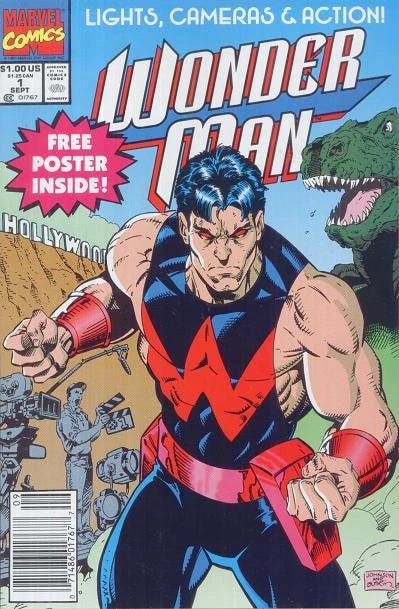
Marvel’s new “Wonder Man” series on Disney+ is the best streaming series that Marvel has done in quite some time. But it’s not about the Wonder Man that I know from the comics. This is really a brand new character with a familiar old name
.
There’s something about the way that Marvel Studios adapts characters from the comics that bothers me. Usually with the leading characters in a Marvel Studios movie or Disney+ streaming series, their depiction is faithful to the comics version. But with supporting characters, Marvel Studios and Marvel Television have what to me is an irritating tendency to use a name from the comics but not the comics character’s personality by or background. In effect, the movies and TV series will create an entirely different character named after the one in the comics.
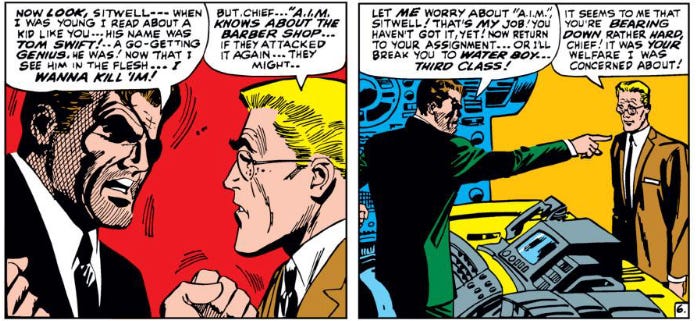
I first noticed this proclivity with Marvel Studios’ version of Jasper Sitwell. He was created by Stan Lee and Jack Kirby in the “Nick Fury, Agent of S.H.I.E.L.D.” series in “Strange Tales” # 144 in 1966 (so this year is his 60th anniversary). Yes, both the comics and the movie versions are S.H.I.E.L.D. agents. But Lee and Kirby’s Sitwell was in part designed as comic relief: he was young, with glasses and a crewcut, and had a Boy Scout-like personality, naively and idealistically loyal to S.H.I.E.L.D. and its director Nick Fury. It’s long been said that Lee and Kirby intended Sitwell to be an affectionate parody of new Marvel staffer Roy Thomas, one of the first comics fans turned professional. Lee even nicknamed him “Roy the Boy” in contrast to himself, “Stan the Man.” The name “Sitwell” reminds me of the late British writer Dame Edith Sitwell. So I assume that Lee and Kirby were emphasizing Jasper Sitwell being a WASP in creating him.
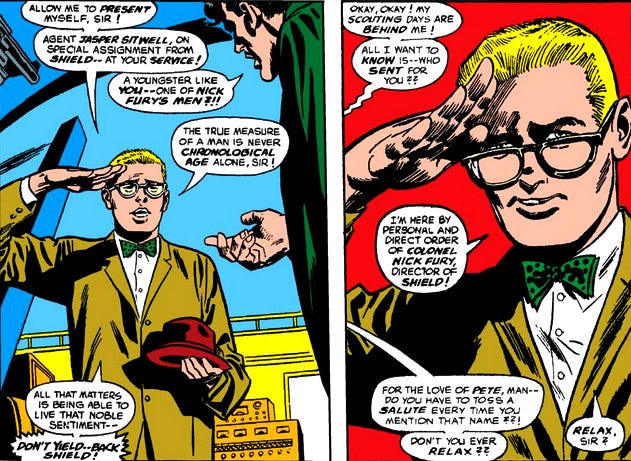
The movie version of Sitwell isn’t young, and indeed is bald. He doesn’t have a comedic side. And most importantly, the movie version of Sitwell turns out to be a HYDRA mole who has infiltrated S.H.I.E.L.D., whereas Lee and Kirby’s Sitwell is so deeply loyal to Fury and S.H.I.E.L.D. that he would never betray them.
Now there’s a new Marvel Disney+ series called “Wonder Man,” and I think it’s the best Marvel streaming series in years. And yet it mostly reimagines the character. This Marvel Television Wonder Man has almost nothing in common with the original comics version aside from the name.
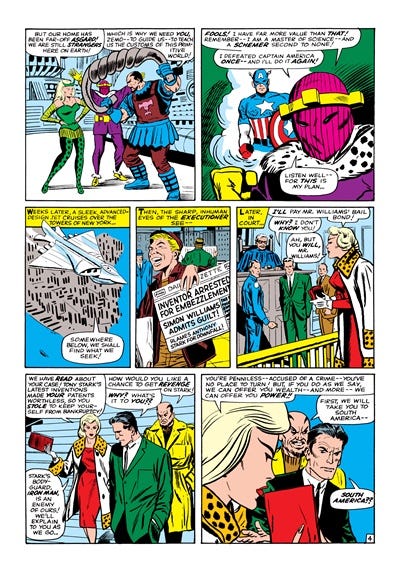
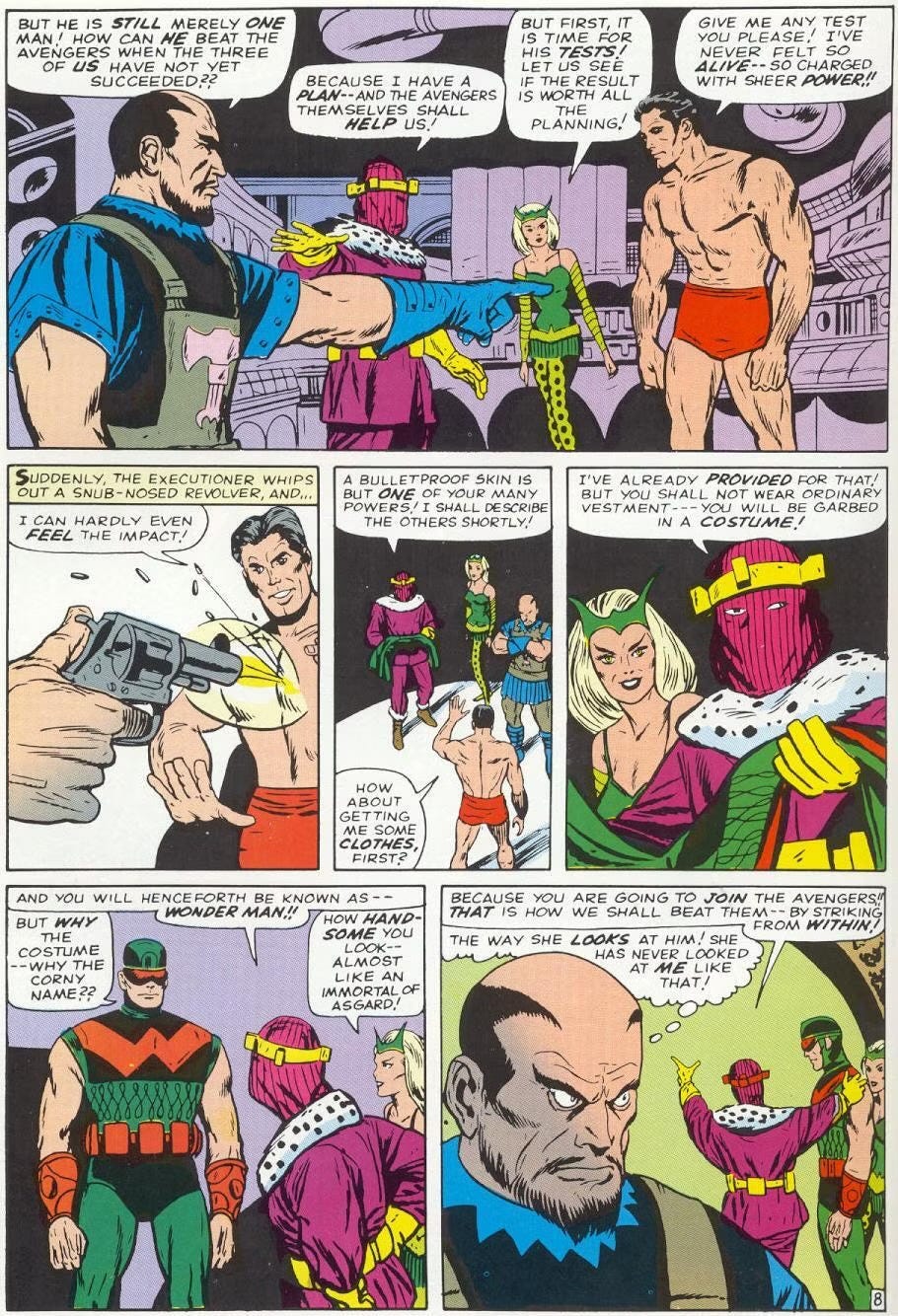
Wonder Man was created by Stan Lee, Jack Kirby and Don Heck, and debuted in “Avengers” #9 in 1964. He was Simon Williams, a wealthy white businessman and competitor of Tony Stark. When Williams’ company slid towards bankruptcy, Williams embezzled funds from his own company. As a result Williams was arrested and seemed doomed to imprisonment. But the Avengers’ enemy Baron Heinrich Zemo had him bailed out. In return Williams agreed to take part in Zemo’s new plot against the Avengers. Through ionic energy and other means, Zemo endowed Williams with super-powers including vast superhuman strength and near-invulnerability. However, to ensure that Williams remained loyal to him, Zemo told him that he needed to take a serum of Zemo’s regularly to stay alive. As the costumed hero Wonder Man, Williams accepted an invitation to join the Avengers. However, impressed by their heroism, Wonder Man turned against Zemo and helped the Avengers battle him. Without Zemo’s serum Wonder Man seemingly died.
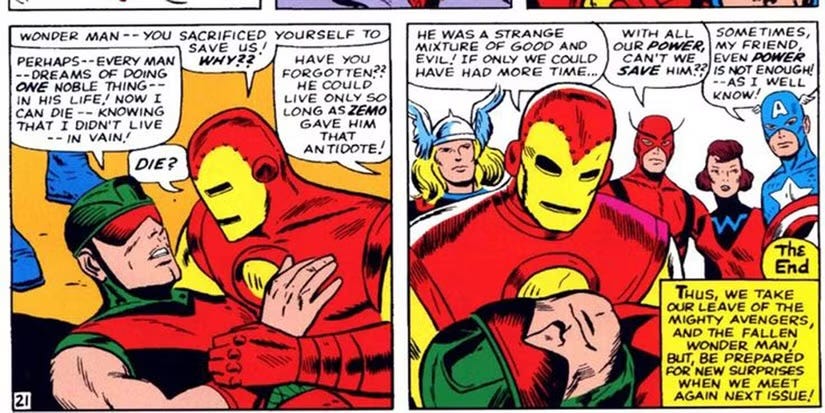
Dr. Henry Pym, a member of the Avengers, used advanced technology to record the “brain patterns” of Wonder Man’s mind. The robot Ultron stole those “brain patterns” and utilized them in creating the mind of the android Vision. I am not certain what “brain patterns” means since the Vision’s personality seemed unlike Wonder Man’s.
Simon Williams’ criminal brother Eric Williams blamed the Avengers for his demise and became the costumed villain called the Grim Reaper to avenge him.
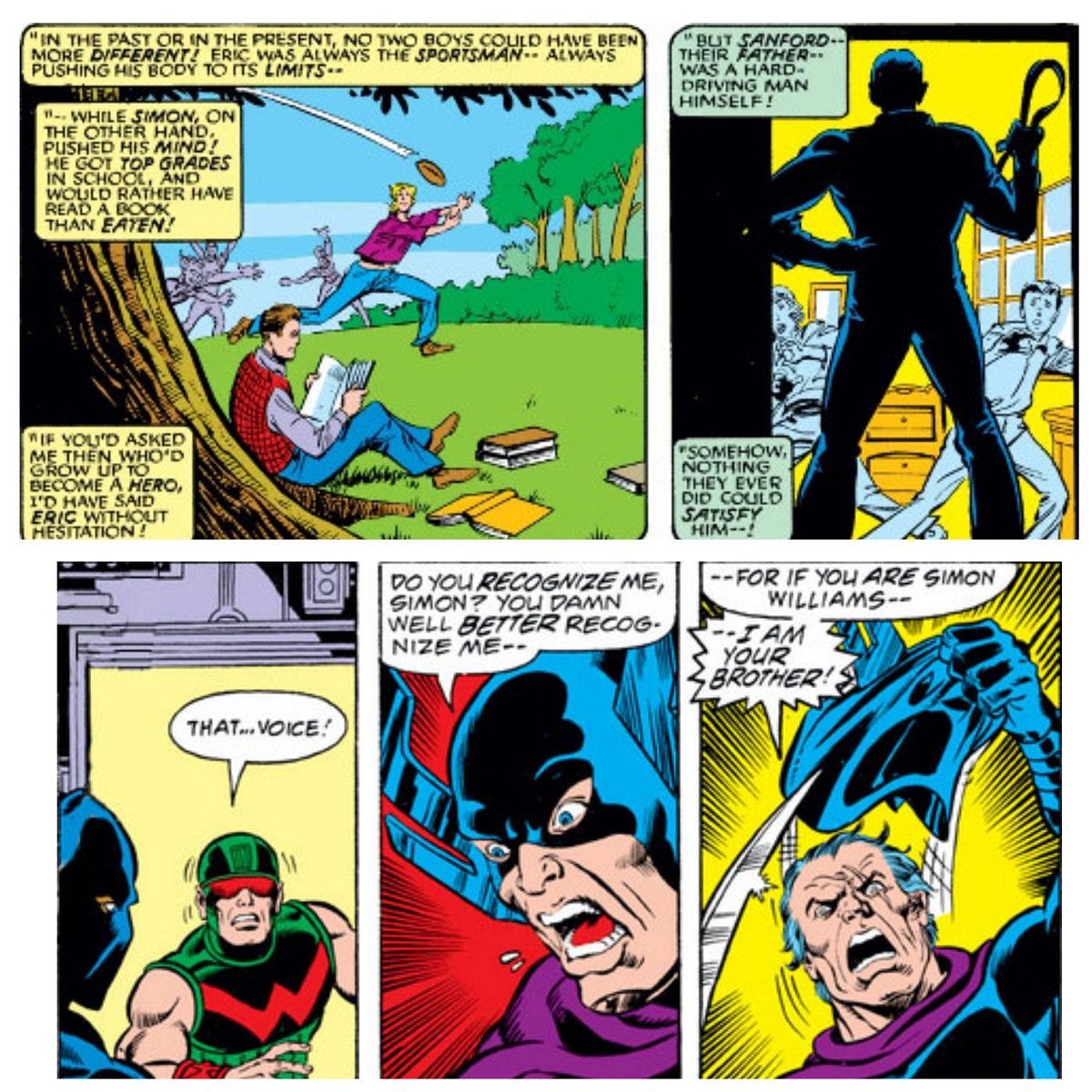
In actuality Wonder Man was not dead; his super-powers instead rendered him comatose. Wonder Man was resurrected three times, the last time being permanent. Wonder Man rejoined the Avengers. He discovered that he could transform his body into pure ionic energy, making him truly indestructible, and back to human form. Years later he would also discover that he could fly.
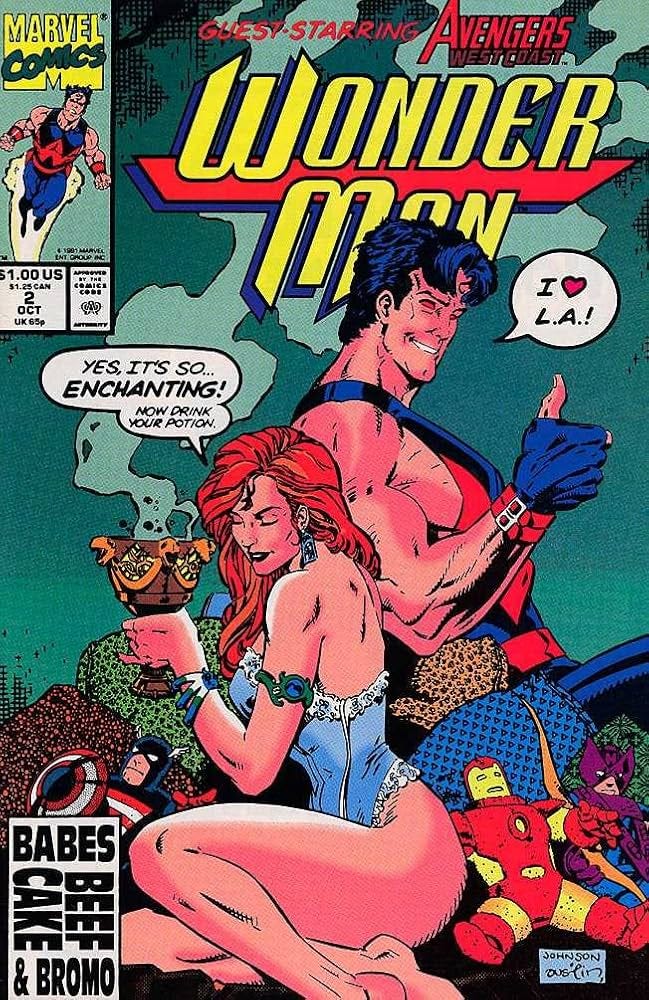
Eventually Wonder Man embarked on a new career in Hollywood, becoming a stuntman and an action movie star.
So how much of this survived into the television series? The hero is still named Wonder Man and Simon Williams. He’s Black and Jamaican-American, not white. I’m used to Marvel and DC films switching a character’s race, and the most prominent example, Samuel L. Jackson’s Nick Fury, is entirely successful. (That switch actually first happened in Marvel’s Ultimate comics line, depicting an alternate universe.) Wonder Man’s race switch also works for me, giving the character an interesting new ethnic background which the comics version lacked.
But the television Wonder Man never was a corrupt businessman, never met Baron Zemo, had no connection with the Avengers, never had to earn moral redemption and never “died”! He derived his super-powers by accident, not through a Faustian bargain with Zemo. The TV Wonder Man has a brother named Eric, as does the comics original, but this Eric isn’t a criminal, and certainly isn’t the costumed super-villain the Grim Reaper. (Interestingly, the Grim Reaper will reportedly show up in a forthcoming Disney+ series, “Vision Quest.” And this Grim Reaper will surely not be Eric Williams.) The Simon Williams of the comics only turned to acting after having his career as the wealthy head of his own company and after establishing himself as a superhero in in the Avengers. The Disney+ Simon Williams has always been an actor, struggling in his chosen career for a decade before finally achieving movie stardom in the course of this series.
So really all that the TV version of Wonder Man has in common with the original in the comics is his real name, his superhero name, his vocation to be an actor, and a few super-powers. Everything else is different.
But I like this alternate version of Wonder Man / Simon Williams. Watching the series, I found that I could easily identify with aspects of his life and personality.
Perhaps most importantly, this Simon Williams pursues his dream of being a successful actor for a decade without success, yet he keeps on striving. I myself have spent my adult life following my own muse, that of a comics historian. There have been times in my life when I’ve been prosperous doing this, and other times when I have not. But I can’t imagine myself not following my muse and being happy.
For Simon Williams in this series, he struggles for years but persistence pays off and he finally becomes a success, a famous and prosperous movie star. I’m in my senior years now and still hoping for a major success.
In recent years I have also done amateur acting with a play reading group on Zoom. So I find the “Wonder Man” series insightful in examining approaches to acting. No matter how small the role he gets, Simon Williams does as much as he can to find the right interpretation of his few lines, and to create a backstory for his character. The series portrays this as comedic, since Simon goes way overboard in analyzing his lines to create a fully realized character, and ends up sabotaging himself when his colleagues get exasperated by the lengths he goes to. But this is insightful about how actors work. Even when I get assigned minor supporting roles in the Zoom play group, I too try to analyze my lines to develop a character. The difference is that I seem to know how far to go, whereas Simon does not.
The series contrasts Simon’s approach with that of the show’s second most important character, the veteran English actor Trevor Slattery, played by Sir Ben Kingsley, who first appeared in this role in “Iron Man 3.” Slattery discourages Simon from worrying so much about his character’s backstory. Slattery instead relies on intuition to interpret a character, and it seems to work for him.
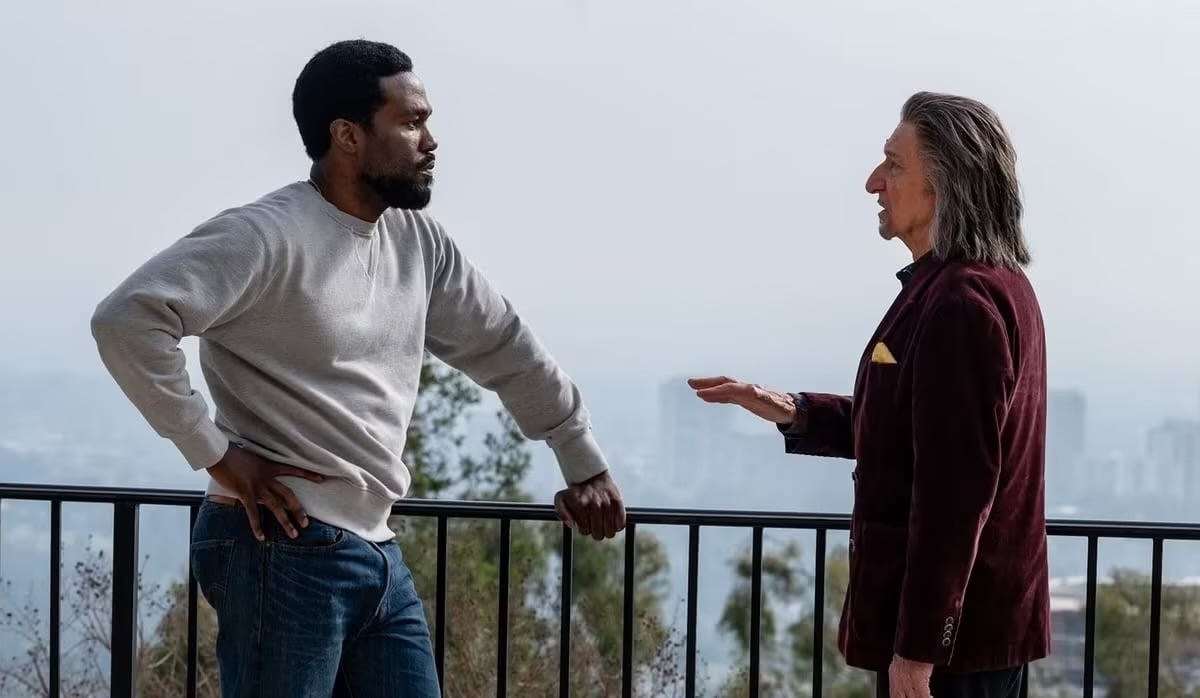
I would say that both intuition and intellectual analysis are helpful in acting. But so look, here’s a topic that I never expected to see examined in a Marvel show!
In the show Simon Williams is not the original Wonder Man. Indeed, the original Wonder Man in the Marvel Cinematic Universe is not a person but a role. This Wonder Man was a fictional superhero in a movie made decades ago, at a time before the public was aware of real life superheroes (aside from Captain America, who had disappeared towards the end of World War II). I suspect that setting the creation of the fictional Wonder Man two generations ago s intended to explain why he has what seems such a corny name in 2026. When Simon saw the movie as a child, it was apparently already an old movie. This cinematic Wonder Man visually resembles the comic book version: white, in a costume from the comics. The MCU Simon Williams immediately became a fan of this fictional Wonder Man. Even as an adult, playing Wonder Man was his dream role as an actor. And in this series he gets to audition to play the part in an updated remake of the “Wonder Man” movie.
I can identify with this, too, in that I, and so many of my colleagues in comics were fans of Marvel and DC comics and their superheroes when we were growing up, and carried on our enthusiasm for them into adulthood. As adults we got to work for DC and Marvel and got to write and draw these superheroes. This was our dream come true. In the course of the “Wonder Man” TV series, Simon Williams finally gets to play Wonder Man in a movie, and thus figuratively “become” Wonder Man. We writers and artists got to write or draw these characters we loved as children, and now through writing and drawing project ourselves into these characters, figuratively becoming these legacy superheroes.